FACTOMETER
 Investigative
 Data journalism
 Explainer
 VIdeos
 en
en ру
ру հյ
հյ

In the run-up to parliamentary elections in Armenia, narratives casting doubt on the integrity of the electoral process are gaining traction across both political discourse and social media platforms.
A number of political figures and expert circles are advancing claims ranging from alleged election fraud to assertions of foreign interference.
Some of these claims lack factual substantiation or are framed in a manipulative manner.
The Fact Investigation Platform has analyzed the most widely circulated narratives in February and March, examining their dissemination patterns and the actors behind them.
Narrative #1: Elections are being rigged
“Elections have long been rigged.” The circulation of this narrative began among representatives of the Republican Party. First, Armen Ashotyan, followed by Serzh Sargsyan, promoted this narrative and concluded that “it is a fact.”
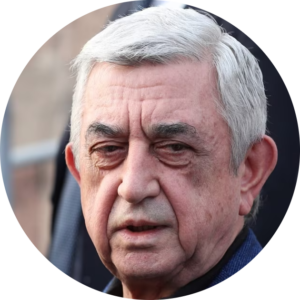 Serzh Sargsyan: “If people are being arrested, if… how should I put it… if state funds are being spent differently than they would be in a non-election year, and so on — all of these are violations. How does rigging happen? That’s exactly how it happens. It’s been a long time since we’ve had ‘stuffing the box’ (referring to ballot stuffing, which used to be part of the electoral process in previous years — ed.).” Serzh Sargsyan: “If people are being arrested, if… how should I put it… if state funds are being spent differently than they would be in a non-election year, and so on — all of these are violations. How does rigging happen? That’s exactly how it happens. It’s been a long time since we’ve had ‘stuffing the box’ (referring to ballot stuffing, which used to be part of the electoral process in previous years — ed.).” |
Sargsyan’s younger party colleague, MP Hayk Mamijanyan, made the same claim from the parliamentary podium, while also calling on citizens to “participate in the elections by all means.”
Notably, a similar wording was also used by Edmon Marukyan, leader of the Bright Armenia party.
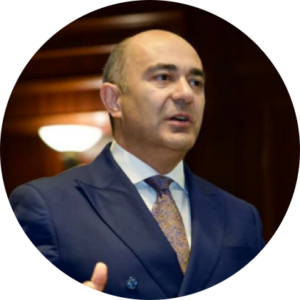 Edmon Marukyan: “I believe the rigging has already begun. Election fraud has already started. I am surprised that many people lack even basic electoral literacy to understand that fraud is not only about stuffing ballot boxes on election day, not about falsifying protocols, not about gatherings near polling stations, not about vote buying on election day — but rather about punishing political opponents before the elections, i.e., right now.” Edmon Marukyan: “I believe the rigging has already begun. Election fraud has already started. I am surprised that many people lack even basic electoral literacy to understand that fraud is not only about stuffing ballot boxes on election day, not about falsifying protocols, not about gatherings near polling stations, not about vote buying on election day — but rather about punishing political opponents before the elections, i.e., right now.” |
Opposition representatives cite developments such as law enforcement actions during the pre-election period, increased public spending, and the alleged use of administrative resources to support this claim.
However, such factors do not, in themselves, constitute election rigging. In standard electoral terminology, “rigging” refers to violations occurring during voting or vote counting, whereas the examples cited by Sargsyan relate to the broader pre-election environment.
Framing disparate developments under the umbrella of “rigging” risks misleading audiences by suggesting more systemic violations than the available evidence supports.
Thus, presenting different types of phenomena under the umbrella of “rigging” may mislead readers by creating the impression of more widespread violations than what the available facts support.
Narrative #2: Foreign forces influence elections
Following European Union announcements on deploying a rapid response team to Armenia to counter hybrid threats, along with financial assistance, claims of foreign influence over Armenia’s elections have intensified.
Narratives suggest that these steps indicate external control over the electoral process, with some going as far as to claim that election results could be “determined from outside.”
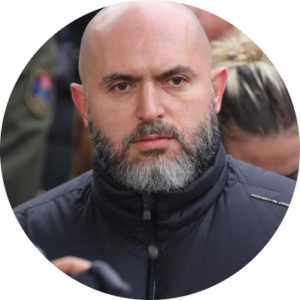 Armen Ashotyan: “The West’s attitude toward Nikol Pashinyan is obvious. The €15 million allocated by the EU, supposedly to combat disinformation, is clearly support for Pashinyan. Moreover, international experts note that while Russia is accused of interfering in Armenia’s elections and domestic politics only indirectly and on certain grounds, the West — the U.S. and the EU — does so openly in favor of Pashinyan.” Armen Ashotyan: “The West’s attitude toward Nikol Pashinyan is obvious. The €15 million allocated by the EU, supposedly to combat disinformation, is clearly support for Pashinyan. Moreover, international experts note that while Russia is accused of interfering in Armenia’s elections and domestic politics only indirectly and on certain grounds, the West — the U.S. and the EU — does so openly in favor of Pashinyan.” |
Stepan Danielyan, a member of the Mother Armenia party, stated in an interview:
“The EU rapid response team is coming to Armenia, and its purpose is clear — they are trying to rig the elections, that is, to use technologies that will call into question the legitimacy of the elections.”
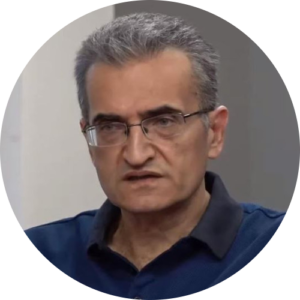 Vardan Poghosyan: “Western powers — both the U.S. and Europe — are directly interfering in Armenia’s domestic affairs and electoral processes, openly expressing their support for Nikol Pashinyan.” Vardan Poghosyan: “Western powers — both the U.S. and Europe — are directly interfering in Armenia’s domestic affairs and electoral processes, openly expressing their support for Nikol Pashinyan.” |
Notably, during the years of Serzh Sargsyan’s rule, particularly during the 2012 and 2017 parliamentary elections:
- The European Union funded and supported improvements to electoral processes
- This support included both technical and advisory components
In addition, in 2016, electoral code reforms were implemented with EU support, including financial assistance.
These precedents indicate that EU engagement in Armenia’s electoral framework is not a new development. Similar initiatives were implemented in previous years, including during Sargsyan’s presidency, focusing on reforms and technical support.
EU assistance does not extend to organizing elections or counting votes; rather, it is designed to strengthen institutional capacity and information resilience.
Russian figures as active promoters of this narrative
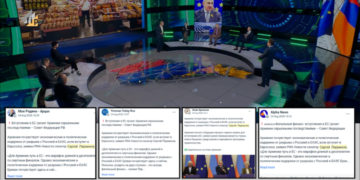
Russian actors have been particularly active in amplifying claims of foreign interference. The pro-Russian outlet AlphaNews featured Russian military expert Pyotr Kolchin, who described Armenia’s request for an EU rapid response team as a “dirty backstage game.”
 Pyotr Kolchin: “Pashinyan has most likely decided to seek help from the Europeans. And the EU already has experience with foreign influence and manipulation last year in Moldova.” Pyotr Kolchin: “Pashinyan has most likely decided to seek help from the Europeans. And the EU already has experience with foreign influence and manipulation last year in Moldova.” |
Another Russian figure, posing as a political analyst, Andrey Perla, told the same outlet that the West is trying to influence Armenia’s parliamentary elections.
 Andrey Perla: “Pashinyan’s positions ahead of the elections are not strong, and it is quite possible that developments may lead to him losing the post of Prime Minister, which would shift Armenia’s foreign policy vector toward Russia, countering U.S. and EU interests. In that case, many projects would be called into question, including the Trump Route.” Andrey Perla: “Pashinyan’s positions ahead of the elections are not strong, and it is quite possible that developments may lead to him losing the post of Prime Minister, which would shift Armenia’s foreign policy vector toward Russia, countering U.S. and EU interests. In that case, many projects would be called into question, including the Trump Route.” |
Pro-Russian Telegram channels have also actively contributed to the narrative. One such channel questions: “European ‘protection’ or interference? What lies behind the EU’s hybrid mission in Armenia?” and continues: “What does the presence of a foreign entity in a sovereign country’s electoral process mean? In essence, it implies granting a foreign entity the ability to participate in ensuring the ‘accuracy’ of elections. This is no longer observation, nor an OSCE mission, but an instrument of influence under the guise of protection.”
Another pro-Russian Armenian figure also raises the question in his channel: “EU monitors?”.
 Benjamin Matevosyan: “Armenia’s authorities are trying to attract foreign ‘power support’ against their own voters in order to exert additional influence over the electoral process. This team arrives under the pretext of combating ‘hybrid attacks.’ Let’s try to understand the logic: the European Union, which is itself a third party, comes to Armenia to reduce the influence of some mythical third party.” Benjamin Matevosyan: “Armenia’s authorities are trying to attract foreign ‘power support’ against their own voters in order to exert additional influence over the electoral process. This team arrives under the pretext of combating ‘hybrid attacks.’ Let’s try to understand the logic: the European Union, which is itself a third party, comes to Armenia to reduce the influence of some mythical third party.” |
Thus, these narratives are promoted both by domestic political actors and by Russian media and expert circles, often employing similar framing.
At the same time, Armenia itself formally requested assistance from the European Union. As a result, a Hybrid Rapid Response Team is expected to be deployed in Armenia in April. The team, alongside communication experts, will assess the country’s information environment, identify risks related to disinformation and information manipulation in the context of hybrid threats, and support efforts to counter them.
Overall, the FIP.am study indicates that in the pre-election period, narratives casting doubt on the legitimacy of the electoral process are actively circulating in the information space.
These narratives frequently rely on generalizations, unverified claims, or selective use of facts, contributing to an environment of distrust around the electoral process.
Hasmik Hambardzumyan