FACTOMETER
 en
en ру
ру հյ
հյ

The number of newly opened pages targeting the Armenian-speaking audience is increasing on Facebook. These pages share paid content that contributes to public polarization and serves Turkish-Azerbaijani narratives based on hate speech.
The Fact Investigation Platform has disclosed two such new pages, which are actively promoting content generated through artificial intelligence (AI) among the Armenian-speaking audience.
Note that FIP.am had earlier referred to pages from India and Madagascar targeting the Armenian-speaking audience, which were advertising posts based on pro-Turkish and pro-Azerbaijani narratives (1, 2).
It is noteworthy that the pages were deactivated after FIP.am referred to them in their articles.
Where are these Facebook pages managed from?
FIP.am has studied the newly opened pages called “Modern Country” and “Reaction of Yerevan“, the content they have created, and the propaganda narratives they are spreading.
Both pages were created on January 28, 2026. One of the pages is managed from Bangladesh, according to Meta, and has one admin. Information on the number of admins or geography of the other page is not available.
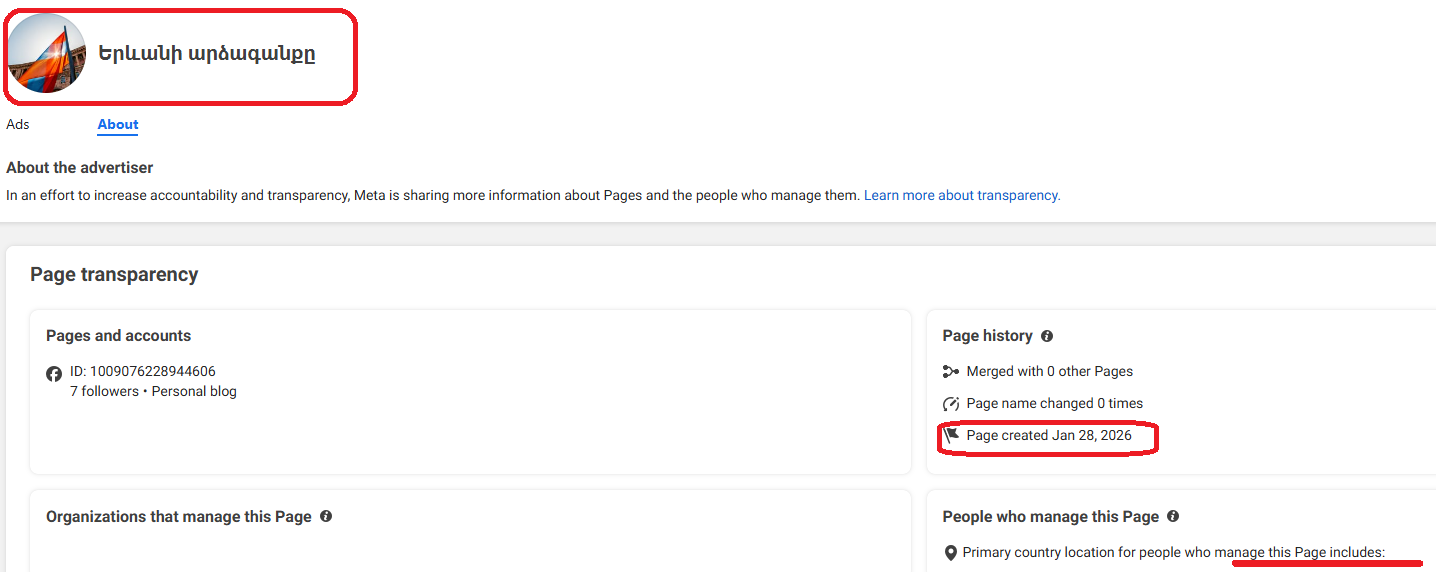
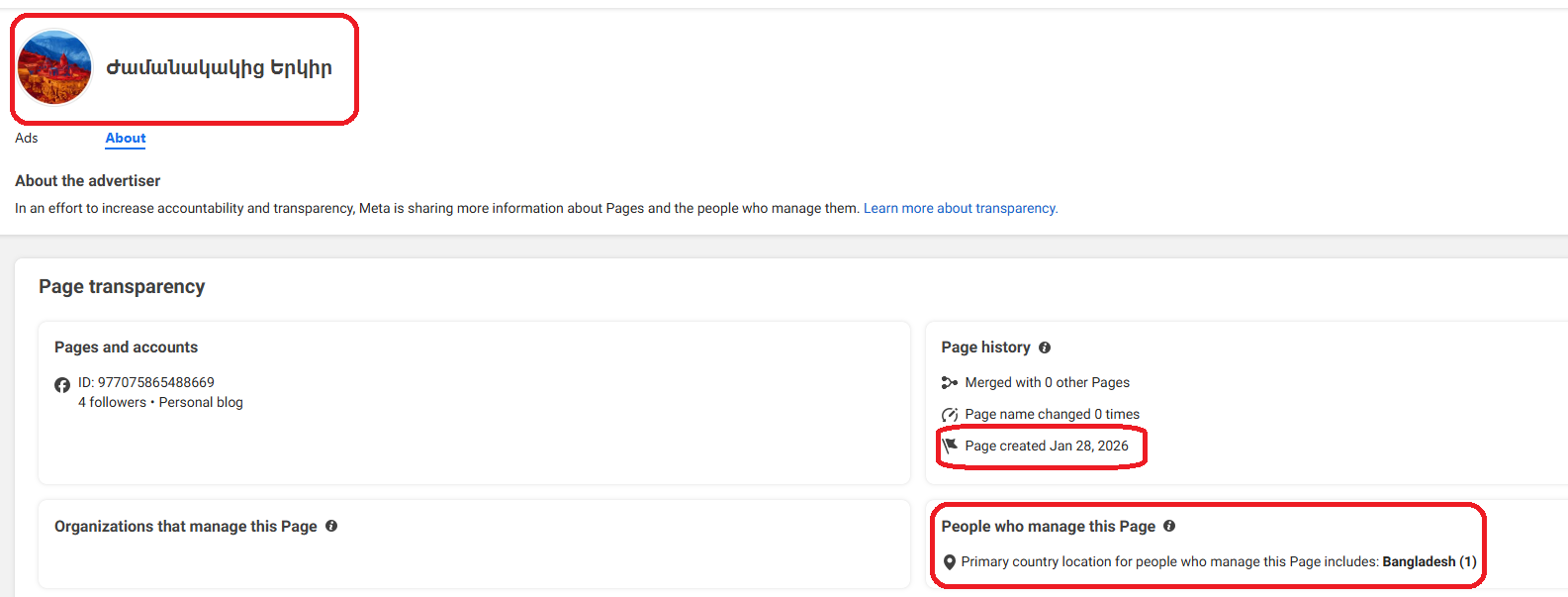
Source of screenshot: Meta
Although both have no more than 10 followers, the posts have collected hundreds of thousands of views and hundreds of reactions and comments due to the promoted content.
Hot topics, propaganda narratives, inappropriate language formulations: What these pages write and what language they use
The page called “Modern Country” published a single post on March 24 regarding an incident involving Armenian Prime Minister Nikol Pashinyan and a woman from Nagorno-Karabakh, which has been actively promoted since the post was made.
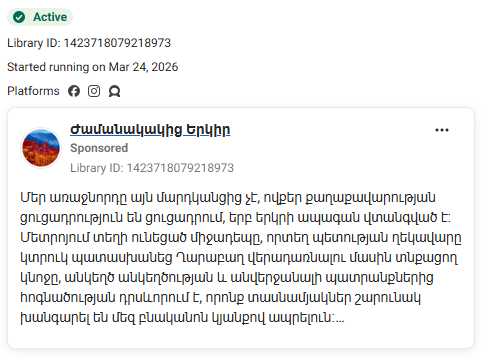
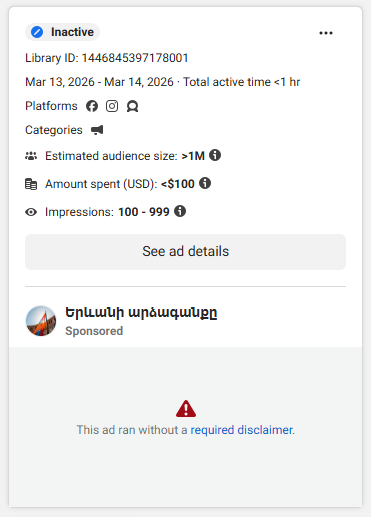
The page called “Reaction of Yerevan” published 2 posts in March of this year. The first post refers to the Nagorno-Karabakh issue and the position of the ruling party in Armenia. The second post refers to the book about the Tatar massacres in Nagorno-Karabakh presented by the former director of the Armenian Genocide Museum to US Vice President J.D. Vance during his visit to the Genocide Memorial Complex, and the subsequent developments.
Around $100 was spent to advertise the post about the book presented by the former director of the Genocide Museum, and it reached approximately one million people.
It is noteworthy that both pages call Pashinyan a “leader” in their posts, expressing support for his actions. At the same time, the posts contain harsh, divisive wording and emotional assessments, contributing to public polarization.
The content disseminated on the pages includes a number of recurring narratives that coincide with the ones circulating in the Turkish-Azerbaijani information domain. In particular, it is mentioned that the the Nagorno-Karabakh region is a “centuries-old historical Azerbaijani” territory and that it “historically never belonged” to Armenians.
Although platforms that detect content generated by artificial intelligence have not recorded explicit traces of AI intervention, the posts clearly contain linguistic irregularities and expressions that are not very typical of the Armenian language.
Thus, pages managed from abroad regularly publish content in the Armenian-language social media domain, disseminating Armenian-language content on important and sensitive topics in Armenia and actively advertising it. These pages spread divisive, manipulative claims that are consistent with the propaganda narratives of third countries.
Nane Manasyan