FACTOMETER
 Investigative
 Data journalism
 Explainer
 VIdeos
 en
 ру
 հյ


A claim that the Trump Route for International Peace and Prosperity (TRIPP) is a military or intelligence infrastructure project against Iran is once again circulating in Armenia’s information space.
In recent weeks, the claim has been disseminated through a statement attributed to an Iranian General for which no original source can be found, an anonymous “tough condition” purportedly imposed by Tehran, and unsubstantiated assertions by a Russian official. In the first two cases, attempts were made to present the claims as reflecting Iran’s official position.
The Fact Investigation Platform has previously examined the circulation of a similar narrative, identifying the Russian and Armenian actors that were disseminating it in a coordinated manner.
On that occasion, the narrative circulated amid joint US-Israeli hostilities against Iran. At the time, FIP.am reported that the claim was not supported by evidence: no official or credible source or document confirmed that the project was military or intelligence-related.
The Iran War and Manipulations on TRIPP: Facts vs Propaganda
This time, FIP.am has again examined the original sources and dissemination patterns of the main claims circulated in recent weeks to determine where they actually originated and what factual basis, if any, they have.
The Iranian General’s alleged remarks exist, but the original source does not
Beginning on August 13, a statement concerning the TRIPP project and attributed to Iranian Major General Rahim Safavi began circulating on social media, citing a Russian-language Telegram channel. According to the reports, the Iranian General said, in particular, that there was “neither genuine understanding nor common ground with Armenia” regarding the TRIPP project.
“On the other hand, in view that we oppose the US presence in the Persian Gulf, why should we support its presence in the South Caucasus? We view the region and the security of our borders as a single whole. Therefore, the project in its current form poses a threat to Iran. We are continuing negotiations with Armenia. However, if responsibility for security there is entrusted to the US armed forces, Iran reserves the right to respond and take appropriate measures,” the Iranian General was quoted as saying in the circulating reports.
The remarks attributed to Safavi were presented as a response to statements made earlier, on August 11, by Sargis Khandanyan, an MP from the ruling Civil Contract faction. During a press briefing with journalists, Khandanyan said that “there is an understanding between Armenia and Iran regarding TRIPP” and that “Iran-US tensions will not affect the implementation of the project.”
The Fact Investigation Platform verified the authenticity of the information and examined both its purported original source and how it spread.
We found that, beginning on the evening of August 13, dozens of Armenian media outlets disseminated the statement attributed to the Iranian general about the TRIPP project in a coordinated manner and at considerable speed.
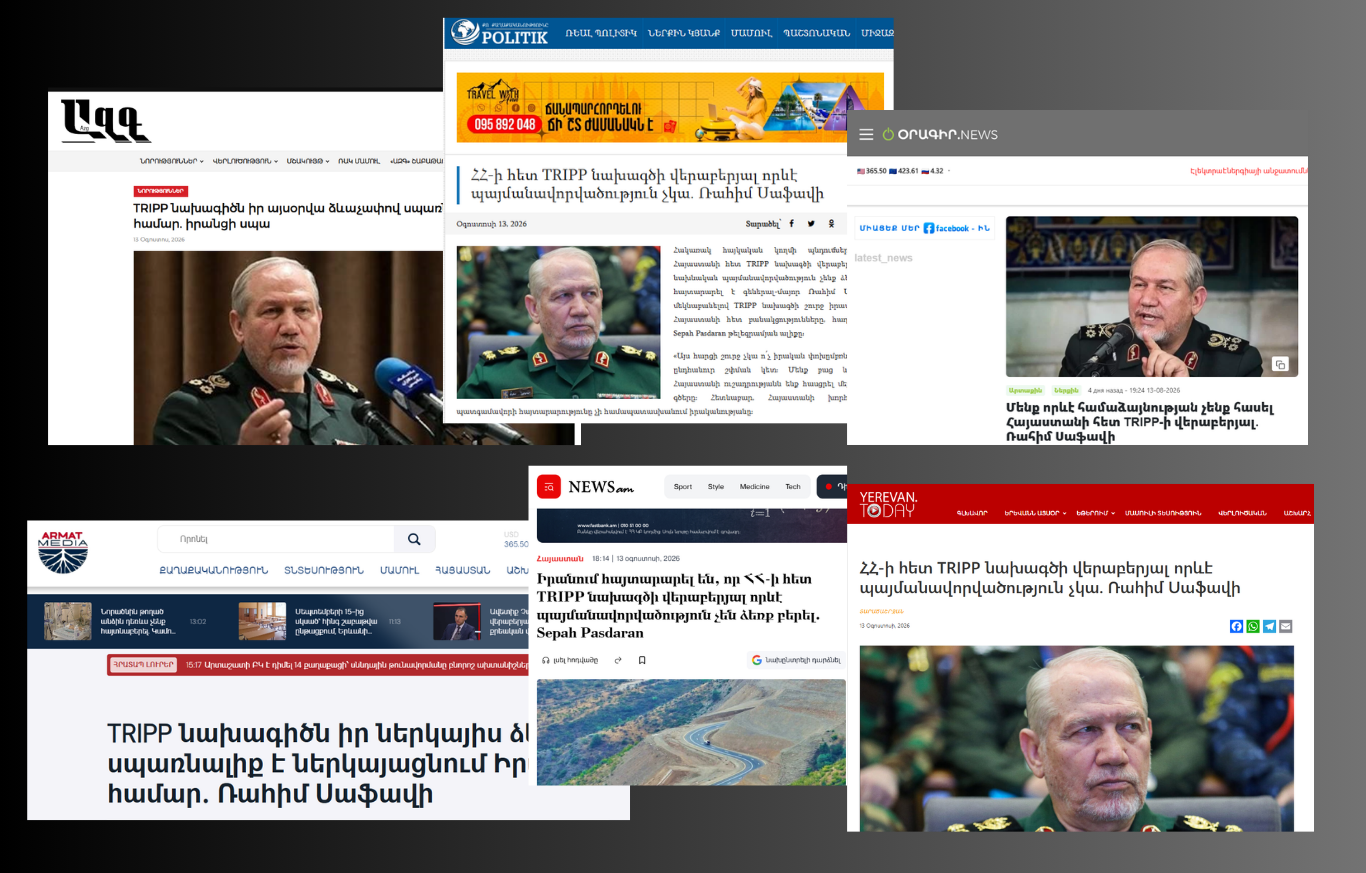
Screenshots from Yerkir.am, Yerevan Today, Politik.am, News.am, Oragir News, Armat Media, Azg.am
Levon Zurabyan, a representative of the Armenian National Congress party, also shared the report on his Facebook page, claiming that Safavi had “accused the Armenian side of misrepresenting Iran’s position on TRIPP.”
“What’s most alarming here, is that the Armenian authorities are effectively once again lying to their own people, attempting to conceal an adventurist undertaking being pursued solely for the purpose of retaining power – one that could bring further catastrophic consequences for Armenia and the Armenian people,” Zurabyan wrote.
His post was subsequently picked up by several Armenian media outlets.
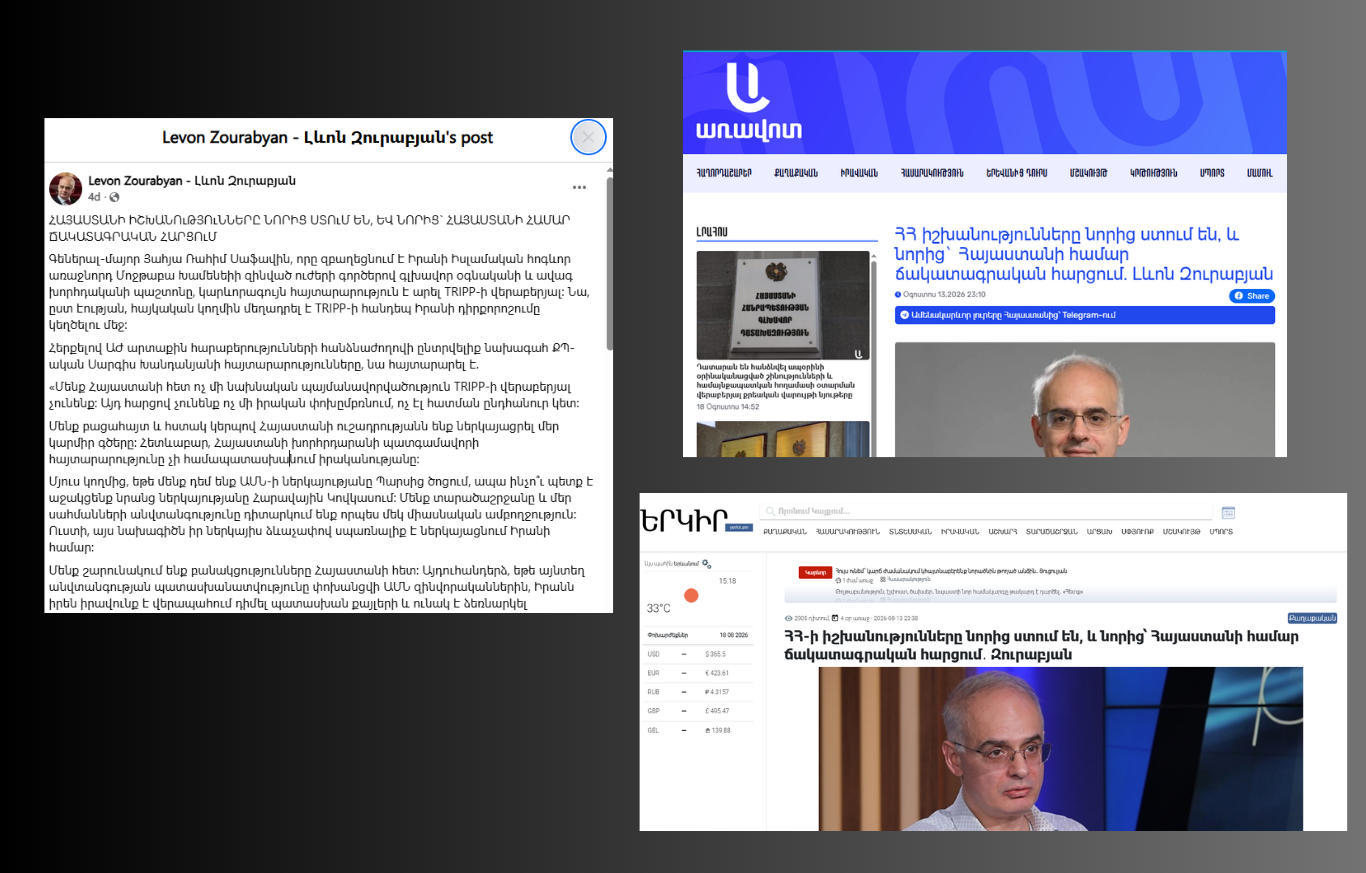
Screenshots from Zurabyan’s Facebook page, Yerkir.am, and Aravot.am.
Russian-language Telegram channel is the sole source of the claim
The information was first published on August 12 by a Russian-language Telegram channel called @sepah_pasdaran_ru, which was presented in Armenia’s information space as a channel belonging to Iran’s Islamic Revolutionary Guard Corps (IRGC).
Notably, the channel listed the Russian Federation as the location from which the page was operated, while its description stated that it covered news about the Iranian armed forces.
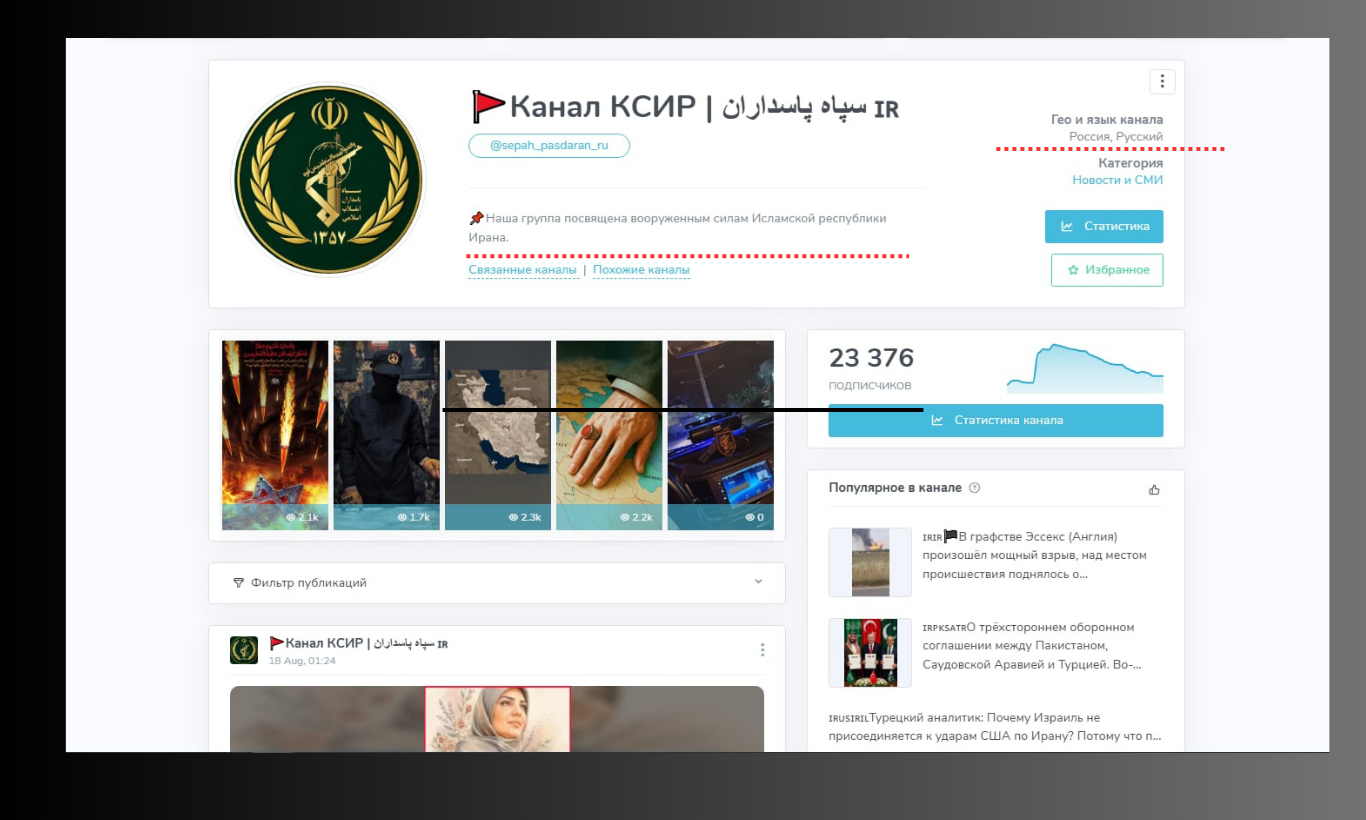
However, this channel does not appear on the IRGC’s list of official pages and accounts. The Corps previously published the addresses of its resources across various social media platforms, according to which its presence on Telegram is through the sepahnews.ir channel.
Significantly, apart from this Telegram channel – which is neither an official IRGC channel nor an affiliated account – no second source could be found reporting the statement attributed to Safavi. FIP.am’s monitoring found that no credible or non-credible Iranian-language source had published such information.
In effect, the report that spread through Armenia’s information space at lightning speed was based exclusively on a post by a single Russian-language Telegram channel that is neither an official IRGC account nor affiliated with the organization.
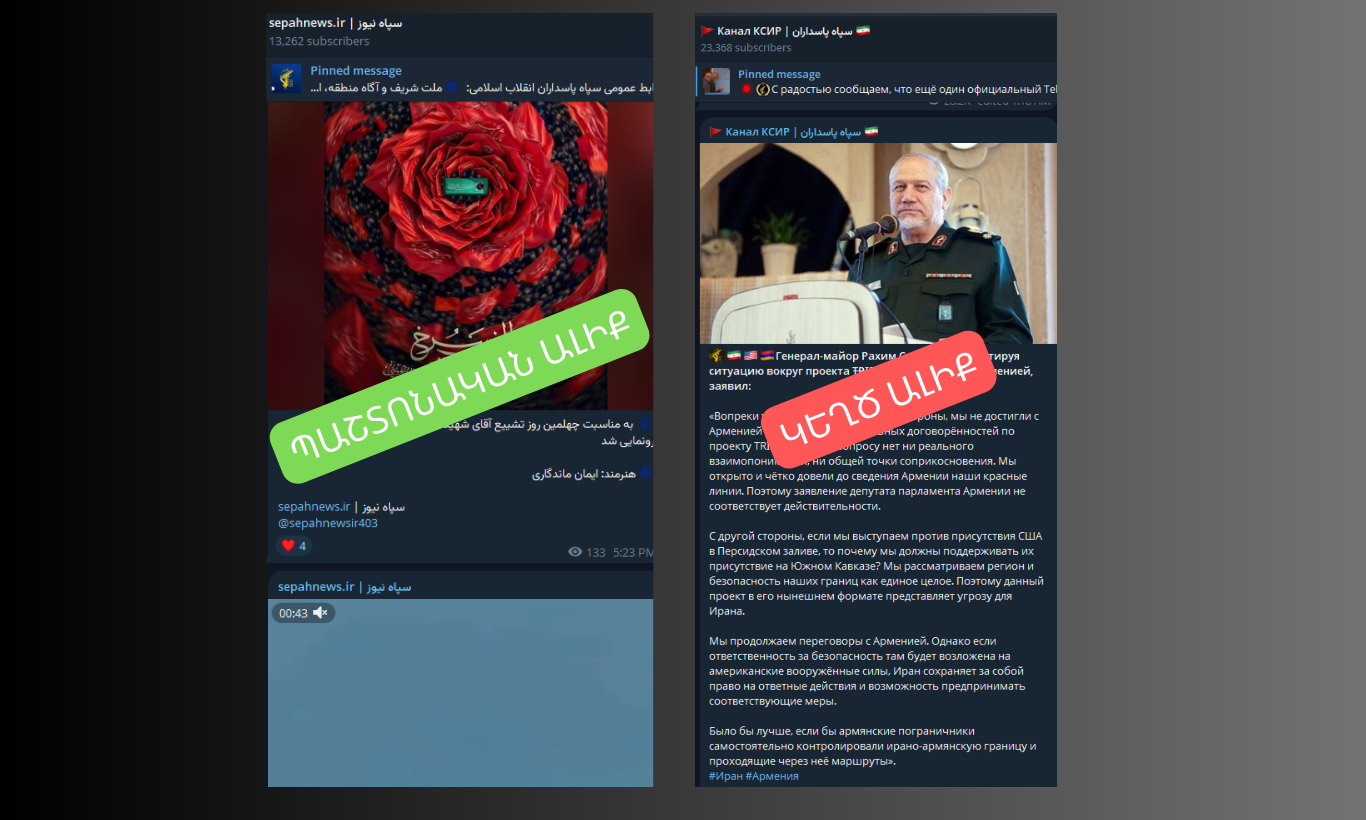
Screenshots from the IRGC’s official and fake Telegram channels
Unsupported claim by a Russian Security Council official
Days earlier, a claim portraying TRIPP as military and intelligence infrastructure directed against Iran had also come from the Russian Security Council. Deputy Secretary Alexei Shevtsov, in particular, claimed that “the implementation of the ‘Trump Route’ through Armenian territory would make it possible to deploy US troops directly on the Iranian border.”
“The so-called ‘Trump Route’ through Armenian territory gives the Americans the opportunity to deploy their troops or units of private military companies, as well as intelligence infrastructure, directly on Armenian territory near the Iranian border,” Shevtsov said.
However, claims that TRIPP is a military-intelligence project are not supported by any credible source, document, or official information. Moreover, in the documents published by Armenia and the United States, the project is presented as a transport, logistics, and economic initiative. They contain no provisions on the deployment of US troops, private military companies, or intelligence infrastructure.
The “Anonymous Source,” Tehran’s “Tough Condition,” and “Russian Troops”
Days after the Russian Security Council official’s statement, on September 7, two Armenian media outlets, News{.}am and AlphaNews, published, just half an hour apart, literally identical reports claiming that Tehran had “unexpectedly imposed new tough conditions on Pashinyan.”
Citing an “anonymous source,” the outlets wrote: “The Iranian authorities have demanded that liability for protecting TRIPP be entrusted either exclusively to the Armenian armed forces or to the armed forces of a third country already present on Armenian territory [apparently referring to the Russian armed forces].”
The information published by News{.}am was subsequently presented as an established fact during a press briefing by Levon Kocharyan, an MP from the Armenia Alliance faction. Through him, the anonymous claim was also disseminated by various media outlets (1, 2, 3 ).
Among the pages that shared the anonymously sourced information was the Armenian National Congress’s Facebook page “Time to Get Serious,” which published the report alongside a photograph of senior Iranian General Qasem Soleimani, who was killed by US forces in Iraq in January 2020.
Notably, Soleimani was killed six years before the 2025 agreement on the TRIPP project was signed.
Foreign Ministry’s Response
The Ministry of Foreign Affairs of Armenia told FIP.am that the circulating reports of this kind constitute disinformation.
“All documents concluded regarding TRIPP are public. As stipulated in those documents and repeatedly emphasized publicly, control over TRIPP infrastructure and the territories through which it passes will be exercised exclusively by the Republic of Armenia; they will operate under the jurisdiction of the Republic of Armenia, and the deployment of military forces from any third country is ruled out.
“Narratives to the contrary are disinformation,” the Foreign Ministry said.
Conclusion
Thus, in recent weeks, the narrative that “TRIPP is a military and intelligence project directed against Iran” has circulated primarily in three forms: an unverified statement attributed to an Iranian General, anonymously sourced information presented as coming from Tehran, and a claim made by a representative of the Russian Security Council.
The only source identified for the remarks attributed to Safavi is an unofficial Russian-language Telegram channel, while the statement has not been published by any official or credible Iranian news source. The “tough condition” attributed to Tehran is likewise based on an anonymous source and has been denied by Armenia’s Foreign Ministry.
Meanwhile, the published documents concerning TRIPP contain no provisions for the deployment of US troops, private military companies, or intelligence infrastructure. According to those documents, the infrastructure and the territories through which it passes will remain under Armenian jurisdiction and control.
Consequently, the circulating claims that TRIPP would establish a US military or intelligence presence on Iran’s border lack factual substantiation. Although presented in a manner suggesting that they reflected official positions, the claims were based on unverified quotations, anonymous sources, and assertions unsupported by the published documents.
Nane Manasyan