FACTOMETER
 Investigative
 Data journalism
 Explainer
 VIdeos
 en
 ру
 հյ


The border price of natural gas supplied from Russia to Armenia and the tariff paid by consumers differ substantially. This is because, once the gas crosses the border, a number of factors affect its cost: transportation and distribution system costs, losses, the profit of Gazprom Armenia, and value-added tax are added to the price.
The two main links in this gas supply chain are interconnected: Gazprom supplies gas to Armenia from Russia, while at the Armenian border it is purchased and delivered to consumers by Gazprom Armenia CJSC, a wholly owned subsidiary of Gazprom.
In effect, both links of the supply chain are owned by Russia.
It should be recalled that on December 2, 2013, Armenia and Russia signed two agreements concerning the supply of natural gas and related infrastructure. Under the first agreement, Russia’s Gazprom acquired, through a direct sale, the Armenian government’s remaining 20% stake in ArmRosgazprom, thereby becoming the sole owner of the country’s entire gas distribution network.
In addition, the Armenian side undertook to purchase natural gas from Gazprom until 2043.
The Fact Investigation Platform examined the mechanism for determining the price of natural gas imported into Armenia, by compling information on the agreements and factors that account for the difference between the border price and the tariff paid by consumers.
The price of gas at the border is variable
Under the agreement between the Government of the Republic of Armenia and the Government of the Russian Federation on the procedure for determining prices for the supply of natural gas to the Republic of Armenia, signed in Yerevan on December 2, 2013, a mechanism for calculating the border price of gas for Armenia was introduced as of January 1, 2014.
The agreement, however, does not establish a fixed gas price for Armenia. It only specifies a base price and the formula for calculating it. In other words, under the agreement, the gas price for Armenia has always been subject to revision.
According to the agreement, the base price consists of two components: 65% is linked to changes in the price of gas in Russia’s Orenburg Region, while 35% is linked to inflation.
The price of gas supplied to Armenia has changed through subsequent agreements since the 2013 agreement was signed. For example, as of April 2016, it was US$150, while from January 1, 2019, it was US$165 per 1,000 cubic meters.
Since April 1, 2022, the border price of natural gas imported into Armenia has been adjusted according to the actual lower calorific value of the gas supplied. In other words, if the actual calorific value of imported gas is higher than the 7,900 kcal/m³ used as the basis for the calculation stipulated in the agreement, the calculated price per 1,000 cubic meters of gas increases accordingly.
For example, according to data from the Public Services Regulatory Commission (PSRC), the actual lower calorific value of gas for the tariff year running from August 1, 2026, to July 31, 2027, was calculated at 8,353 kcal/m³. As a result, instead of the contractual base price of US$165, the calorific-value-adjusted import price of natural gas is US$174.46 per 1,000 cubic meters.
Thus, US$165 is not the final import price of gas, but rather the base contractual price on which the tariff at which gas is sold to Armenia at the border is calculated.
In practice, the price of gas at the border changes depending on its actual calorific value: the higher it is above the contractual 7,900 kcal/m³, the higher the calculated price per 1,000 cubic meters of gas.
From border to consumer: Why do tariffs differ?
Structurally, the natural gas tariff charged to consumers by Gazprom Armenia CJSC consists of the base price of natural gas, the import price calculated on that basis, value-added tax (VAT)*, Gazprom Armenia’s profit*, as well as losses that inevitably occur during the transportation and distribution of natural gas.
The infographic below illustrates the structure of the final consumer price of natural gas.
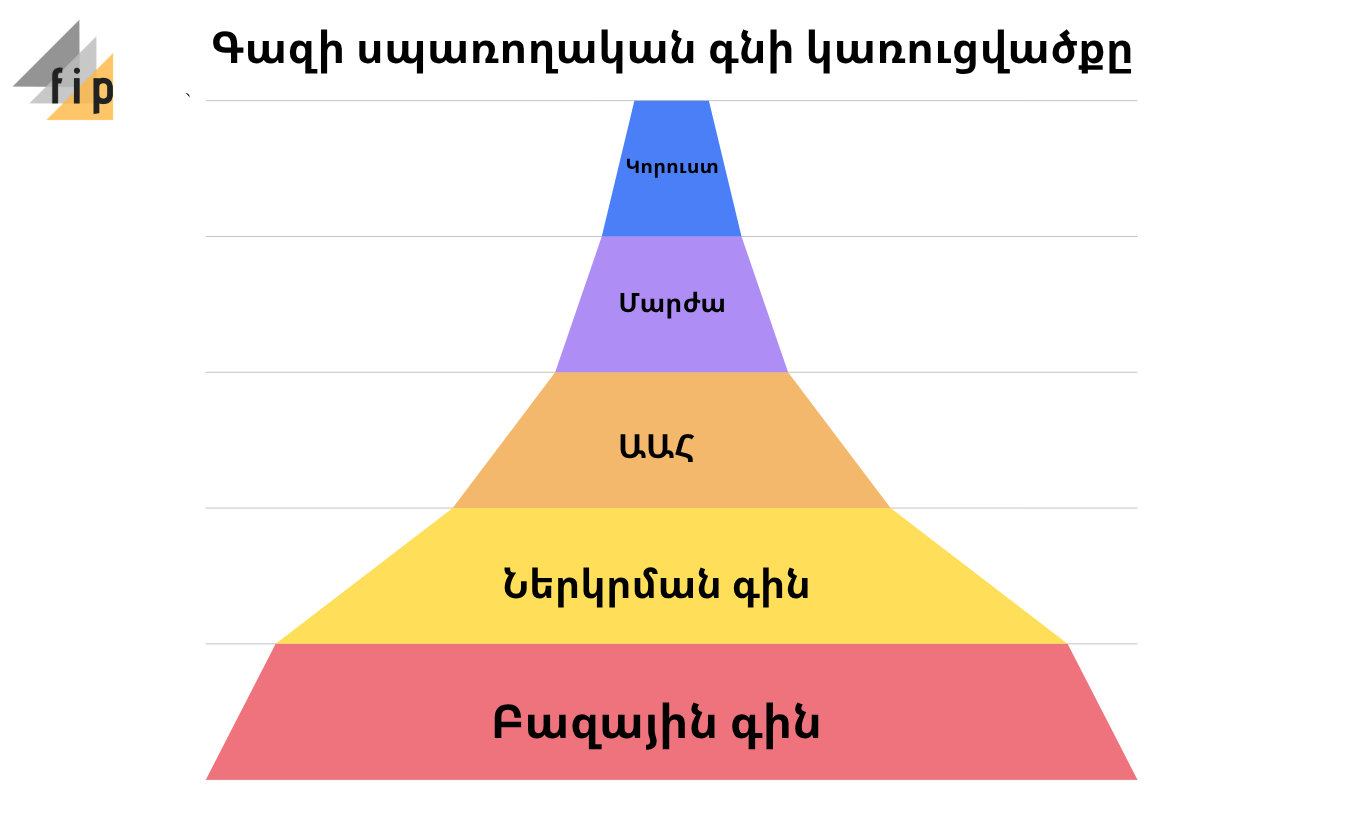
*VAT is a consumption tax of up to 20% that is included in the final gas tariff. It is paid by the consumer, while the gas supplier transfers it to the state budget.
*The company’s profit/margin includes costs associated with the operation of natural gas transportation and distribution systems, including wages, operation and maintenance, depreciation, as well as profit and other cost components.
For example, in the 2026–2027 tariff year, the calorific-value-adjusted import price of natural gas is US$174.46 per 1,000 cubic meters, while the weighted average price of natural gas sold to consumers, including VAT, is US$288.65.
In other words, US$114.19 is added to the price of every 1,000 cubic meters of gas between the border and the final consumer, making up approximately 65.5% of the border price.
The infographic below illustrates the difference between the import price of natural gas and the consumer tariff.
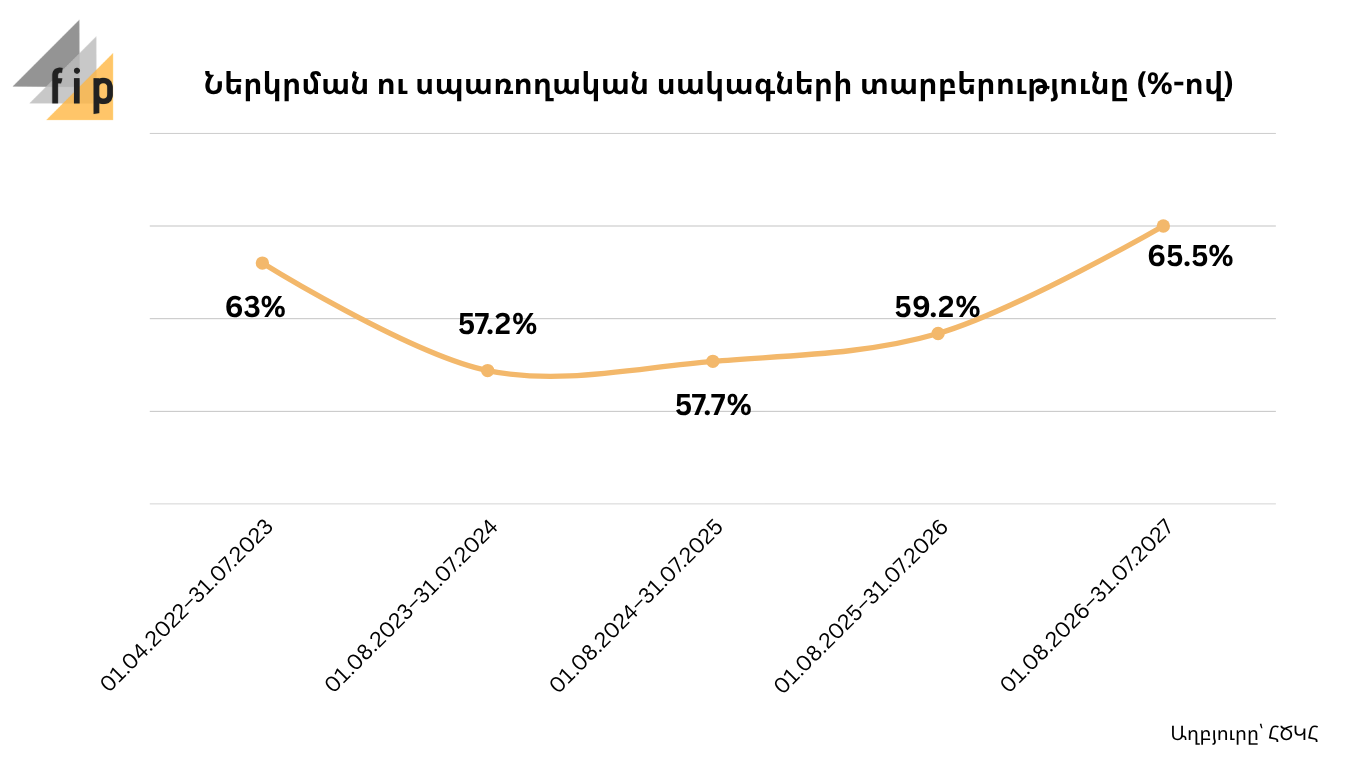
This structure shows that the difference between the border and consumer prices is not attributable to a single factor. It includes the costs of operating the gas system, losses, the company’s profit margin, and taxes.
How the structure of the gas price changed from 2022 to 2027
PSRC data make it possible to compare changes in the average gas price and its main components across five tariff periods.
The infographic below presents the structure of the consumer price of natural gas by period.
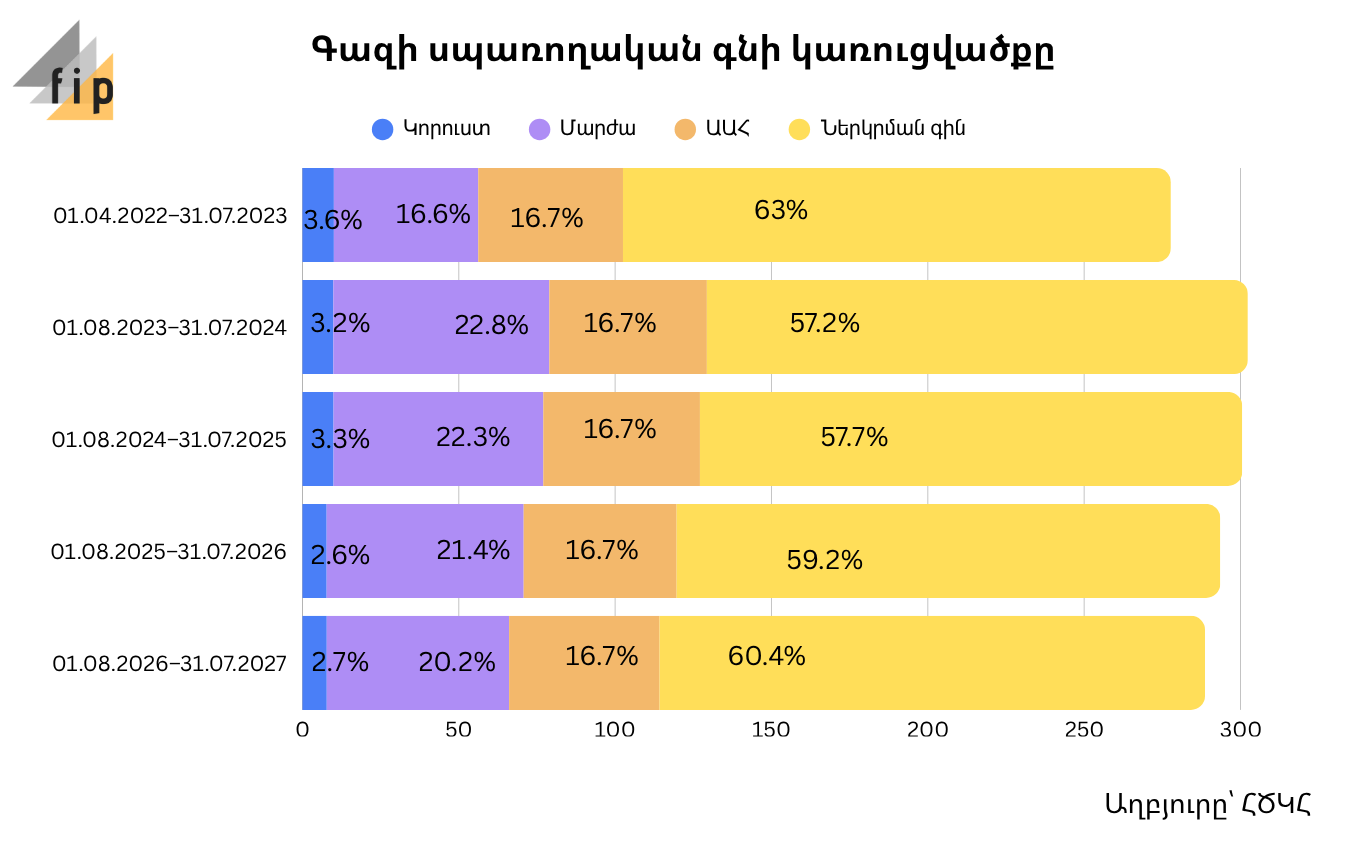
A comparison of the data highlights one important point: over the period under review, the import price remained relatively stable, while the average consumer price fluctuated considerably more.
For example, the import price ranged between US$173.00 and US$175.21 across the five periods.
The infographic below presents the structure of the consumer price of natural gas based on price changes.
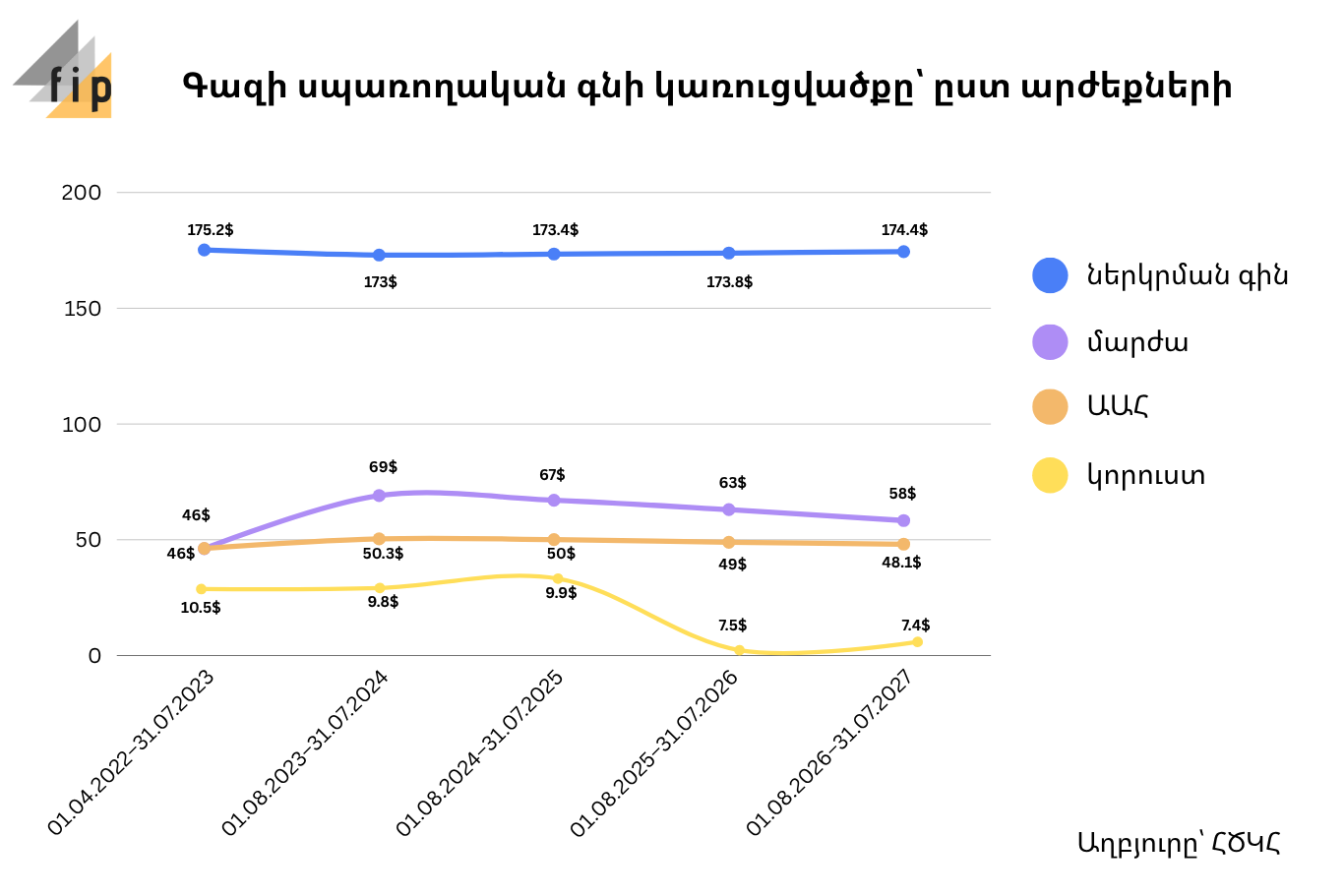
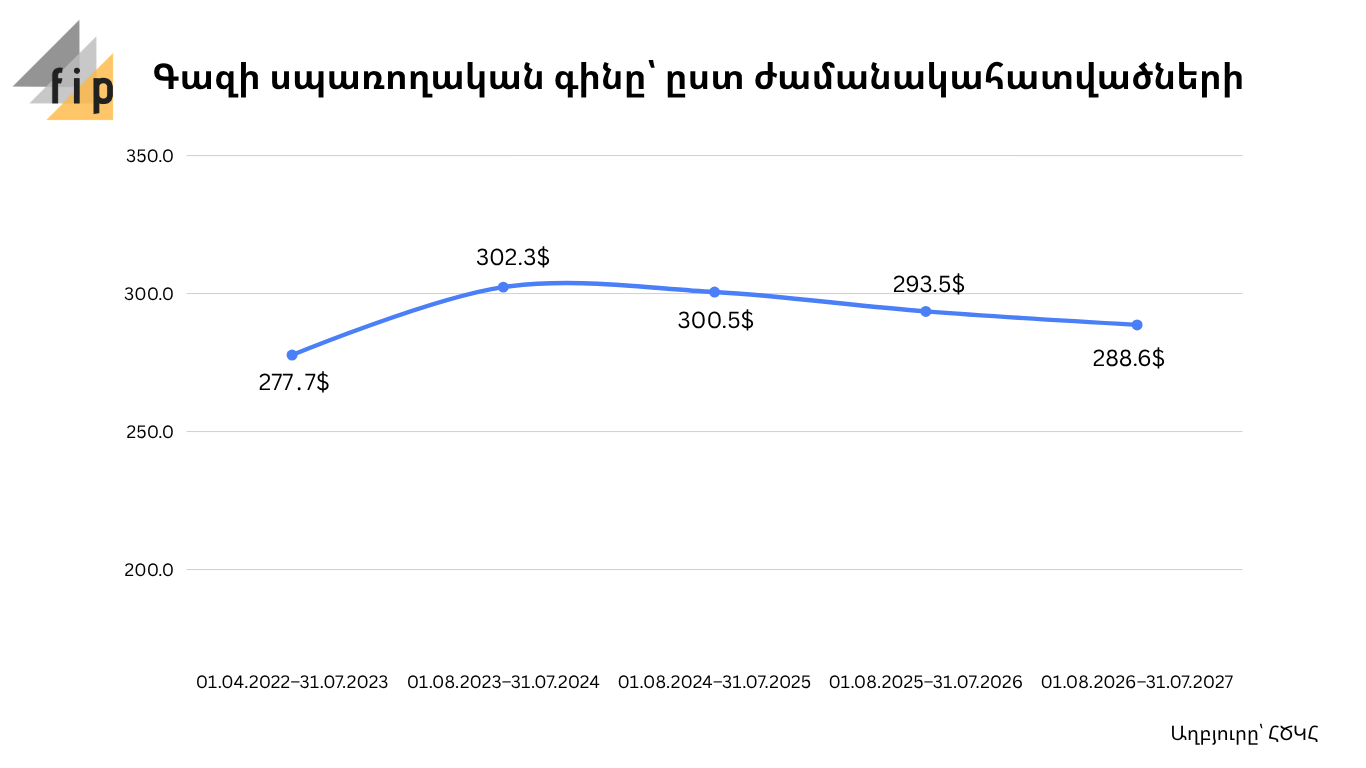
Over the same period, the average consumer price ranged between US$277.71 and US$302.34.
The infographic below presents fluctuations in the consumer price of natural gas by period.
Thus, the border price of natural gas imported to Armenia and the tariff set for consumers are two different indicators and differ substantially. The border price refers to the cost of imported gas, while the final tariff is also determined by the costs associated with operating the gas supply system, losses, the company’s profit, and taxes.
Nane Manasyan