FACTOMETER
 Investigative
 Data journalism
 Explainer
 VIdeos
 en
 ру
 հյ


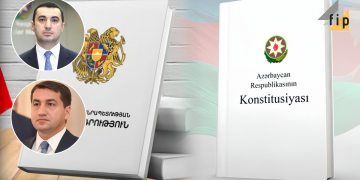
At the OSCE Warsaw Human Dimension Conference, which opened on October 5 in Warsaw, Nazrin Aliyeva, a member of Azerbaijan’s delegation, referred to the number of Azerbaijanis missing as a result of the Nagorno-Karabakh conflict, as well as the need to provide maps of mass graves.
The Fact Investigation Platform examined records on missing persons and Armenia’s official position on sharing information about burial sites.
Aliyeva, for her part, introduced herself as the founder of the Human Rights Protection Center in Azerbaijan.
Nazrin Aliyeva is a participant in the Armenia-Azerbaijan Peace Bridge initiative.
In February this year, she visited Armenia as part of a group of representatives of Azerbaijani civil society.
At the 2025 Warsaw conference, Aliyeva described the village of Nrnadzor in the Meghri region, formerly known as Nyuvadi, as Azerbaijani territory.
What does the figure of around 4,000 missing persons represent?
In her speech, Aliyeva claimed that “around 4,000 Azerbaijanis have remained missing since the 1990s.” She went on to say: “The mass graves being discovered during this period testify to violations of international law.” The Azerbaijani delegate also noted that Armenia should provide Azerbaijan with maps of mass graves.
Different figures for the number of persons missing as a result of the Nagorno-Karabakh conflict have been published over the years. The figure of around 4,000 cited by Azerbaijan has also been challenged by Armen Kaprielian, who headed Armenia’s working group on prisoners of war and missing persons from 2006 to 2018. In an October 2024 interview with Azatutyun, he described Azerbaijan’s figures as inflated, pointing to changes in the numbers reported at different times. Andranik Kocharyan, former chair of the Armenian National Assembly’s Standing Committee on Defense and Security, has also questioned the figure.
In a publication dated July 8, 2025, the International Committee of the Red Cross (ICRC) said that around 4,000 tracing cases have been registered in Azerbaijan through direct contact with families. According to the same publication, since 1995 the ICRC has formally submitted eight lists of missing persons to the Azerbaijani authorities and other parties. The latest list was submitted in April 2024.
Figures for missing persons also appear in the Parliamentary Assembly of the Council of Europe’s Resolution 1553 (2007), which lists 4,499 Azerbaijanis and 947 Armenians as missing. The resolution makes clear that the figures were provided by the respective parties; they were not independently verified or calculated by the PACE.
Azerbaijan’s latest figures on missing persons
In September 2026, Azerbaijan’s Trend news agency, citing the country’s state commission, reported that as of August 31, a total of 4,010 people were registered as missing: 4,004 from the First Karabakh War and six from the Second. The report also stated that 3,682 persons were still considered missing.
It also reported that 328 people were identified through DNA testing and forensic examinations. This figure corresponds to the difference between the registered 4,010 people and the 3,682 who are still considered missing.
The report also stated that 910 sets of human remains and 32 mass graves had been discovered. However, the official statement does not explain what is meant by “sets of human remains” or whether this means that the remains of that many individuals have been identified.
Sharing information about burial sites
In her speech, Aliyeva also said that Armenia should provide Azerbaijan with maps of mass graves. Armenia has previously made official statements expressing its willingness both to share information about missing persons and to cooperate with Azerbaijan.
In particular, Armenia’s Interagency Commission on Prisoners of War, Hostages and Missing Persons stated that, since November 2020, Armenia has transferred to Azerbaijan the bodies of 51 Azerbaijanis killed in the 44-day war, as well as topographic data indicating possible locations of the remains of around 50 people killed in the 1990s. The remains of another 140 Azerbaijanis killed in the 1990s have also been transferred. According to the commission, the topographic data and remains had been obtained from representatives of Nagorno-Karabakh.
In the same statement, the commission proposed that the relevant Azerbaijani authority step up cooperation. At a meeting on March 12, 2024, Armen Abazyan, who was then chair of the commission and formerly director of Armenia’s National Security Service, stressed the importance of holding talks with the relevant Azerbaijani authority, taking into account the parties’ stated willingness to cooperate.
On October 1, 2024, Armenia’s Foreign Ministry also stated that, in cooperation with representatives of Nagorno-Karabakh, Armenia had transferred remains and information needed to establish the fate of missing persons to Azerbaijan. According to the ministry, the Armenian side had agreed to a meeting of the two countries’ state commissions in May 2024, but the meeting did not take place because the Azerbaijani side refused to attend.
On October 3, Gagik Melkonyan, then a member of the Armenian National Assembly’s Committee on Defense and Security and former deputy defense minister, insisted that Armenia had already handed over to Azerbaijan the maps and information in its possession.
Hasmik Hambardzumyan