FACTOMETER
 en
en ру
ру հյ
հյ

In 2024, Armenian Prime Minister Nikol Pashinyan announced that “Armenia has made a strategic decision to build a modular nuclear power plant.” Following this statement, numerous manipulative and false narratives began circulating in the information space regarding Armenia’s cooperation with the West in the field of nuclear energy, as well as claims about shutting down the Medzamor Nuclear Power Plant.
At the time, the Fact Investigation Platform had already summarized the narratives circulated by pro-Russian propaganda resources and individuals posing as energy sector experts.
Later, in a conversation with journalists, Armenian Prime Minister Nikol Pashinyan explained that the document signed with the United States grants Armenia access to information regarding U.S. modular reactor technologies.
 “For countries that are not a Party to this agreement, those technologies are classified; that is, no one knows the level of evolution that modular reactors have reached in the United States. We do have the information that was possible to obtain without this agreement. However, since our interest in that information has significantly increased, and as our relations with the United States are also developing, we signed one or two agreements precisely so that the U.S. would disclose to us the other nuances of the technology, enabling us to conduct a comprehensive assessment.” “For countries that are not a Party to this agreement, those technologies are classified; that is, no one knows the level of evolution that modular reactors have reached in the United States. We do have the information that was possible to obtain without this agreement. However, since our interest in that information has significantly increased, and as our relations with the United States are also developing, we signed one or two agreements precisely so that the U.S. would disclose to us the other nuances of the technology, enabling us to conduct a comprehensive assessment.” |
The Fact Investigation Platform has captured four false and manipulative claims related to the topic.
Claim #1: The nuclear power plant is being shut down at the demand of foreign forces
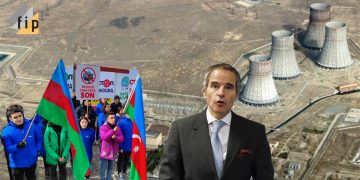
Ahead of Vance’s visit, a number of old narratives regarding the closure of the operating Medzamor Nuclear Power Plant were once again brought into circulation. The most widespread manipulation was the claim that the current authorities had undertaken to shut down the nuclear power plant under pressure from various countries, including Turkey, Azerbaijan, and the United States.
On the eve of Vance’s visit, the issue was raised publicly by Edmon Marukyan, President of the Bright Armenia Party.
 “I know that our enemies want our nuclear power plant to be shut down, and our authorities are fulfilling that demand… In other words, what do our authorities want to do? They want to shut down the nuclear power plant, which is supplied by Russia, because that’s what the West wants, that’s what Turkey wants, that’s what Azerbaijan wants. They say, we will install a modular one instead.” “I know that our enemies want our nuclear power plant to be shut down, and our authorities are fulfilling that demand… In other words, what do our authorities want to do? They want to shut down the nuclear power plant, which is supplied by Russia, because that’s what the West wants, that’s what Turkey wants, that’s what Azerbaijan wants. They say, we will install a modular one instead.” |
In turn, 5th Channel aired a report ahead of Vance’s visit titled “Is Vance coming to Yerevan to shut down the nuclear power plant?” which featured Armen Manvelyan posing as an energy expert.
He claimed that the current authorities are “shutting down the nuclear power plant at the demand of Baku and Ankara.”
 “And since they are closing the nuclear power plant, as compensation Armenia is trying to show that they will bring in and build modular nuclear power plants.” “And since they are closing the nuclear power plant, as compensation Armenia is trying to show that they will bring in and build modular nuclear power plants.” |
What is true and what is not
- Why is the Armenian NPP being closed?
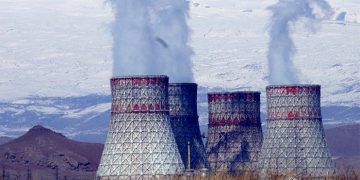
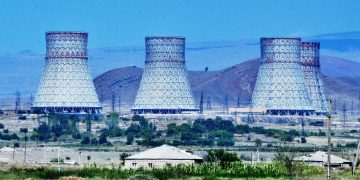
The operating reactor of the Medzamor Nuclear Power Plant belongs to the early Soviet-generation VVER-440/230 series, designed in the 1960s–70s, and originally did not have a clearly defined service life. Power units of this same model once operated in several countries (Germany, Bulgaria, Slovakia, and Russia), but they were fully shut down between 1990 and 2019, mainly due to safety concerns and non-compliance with modern standards.
As a result, today the Medzamor NPP is one of the very few facilities where a VVER-440/230 reactor is still in operation, while in other countries these older nuclear plants were closed exclusively for safety reasons.
- The issue of closing the Armenian NPP is not new
In Armenia, discussions about shutting down the Armenian Nuclear Power Plant (ANPP) and constructing a new nuclear facility have been ongoing since independence.
In 2012, during a pre-election speech in Metsamor, Armenia’s first President Levon Ter-Petrosyan stated that since 1995 Armenia had conducted very serious negotiations with France to build a new 1200 MW nuclear power plant.
In 2005, Armenia’s second President Robert Kocharyan — during whose tenure the ANPP was handed over to the Russian side under the “property-for-debt” agreement — stated in a speech to students of the Faculty of Economics at Yerevan State University: “I do not rule out the possibility of building a new nuclear power plant in Armenia.” In 2007, he stated: “I assume that in 2012–2013 practical work will begin regarding a new nuclear power plant or the modernization of the existing one.”
In October 2008, in his address to the people and the National Assembly, President Serzh Sargsyan stated: “In the coming months, Armenia will begin building a new nuclear power plant. You may ask whether we will be able to do it — I answer that we will. We will easily be able to, if we act jointly.”
- The commitment to close the ANPP was undertaken by Serzh Sargsyan
In 2017, during the presidency of Serzh Sargsyan, Armenia and the European Union signed the Comprehensive and Enhanced Partnership Agreement (CEPA), which included provisions on cooperation in various sectors, including energy.
Article 42(2)(7)(2) of the Agreement stipulates that the parties shall cooperate on the safe closure of the Medzamor Nuclear Power Plant.
The agreement states:Screenshot from the Agreement
- The Armenian Nuclear Power Plant as a target of Turkey and Azerbaijan
For decades, Turkey and Azerbaijan have raised the issue of closing the Armenian Nuclear Power Plant at various levels, attributing false and fabricated risks to it. However, these calls have never influenced the position of the international community or Armenia. In particular, statements and expert assessments by the International Atomic Energy Agency (IAEA) have not confirmed the alleged concerns voiced by these countries.
At the same time, the current government has managed to extend the operation of the Armenian NPP twice — first until 2026 and then until 2036. It is evident that the nuclear power plant, like any other mechanism, could not operate indefinitely.
Conclusion: The Armenian Nuclear Power Plant was meant to be shut down because, as an aging facility, it cannot operate safely forever. The need to replace it with a new plant has been at the center of attention for all leaders of the Republic of Armenia, regardless of pressure attempts from the Turkish-Azerbaijani side.
Meanwhile, in agreement with the IAEA, the current authorities have twice extended the plant’s service life until the construction of a new one. Therefore, claims that the Armenian authorities have set a goal of closing the nuclear power plant at the “Turkish-Azerbaijani” demand or in order to reduce Russian influence in Armenia are unsupported.
Claim #2: We will pay $9 billion for an American modular reactor
Following Vance’s visit, a number of experts and political figures circulated the claim that the United States is allegedly going to build a modular nuclear power plant in Armenia worth $9 billion.
This narrative was promoted by 5th Channel, which, based on comments by Armenia’s second president Robert Kocharyan regarding Vance’s visit, asserted that the potential American modular nuclear power plant to be built in Armenia would cost $9 billion.
In the report, the journalist makes a fundamentally false and fabricated claim:
 “It turns out that the tempting figures published by Vance will, if the nuclear power plant deal goes through, be included in electricity tariffs. The $9 billion will be divided by Armenia’s population of 3 million — adding $3,000 of debt onto each of our shoulders.” “It turns out that the tempting figures published by Vance will, if the nuclear power plant deal goes through, be included in electricity tariffs. The $9 billion will be divided by Armenia’s population of 3 million — adding $3,000 of debt onto each of our shoulders.” |
Energy expert Armen Manvelyan, again speaking to the same TV channel, also claimed that the plant would cost $5 billion, “and then an additional $4 billion would have to be paid for its maintenance and fuel.”
The same claim was voiced on AlphNews by Grigor Balasanyan and Alen Gevondyan posing as political scientists:
 “They are giving us the opportunity to use some kind of technology — but who will pay for it? We will. What does that $9 billion cover? Suppose that plant is built — it will be included in the tariff that Armenians, the citizens of Armenia, will pay.” “They are giving us the opportunity to use some kind of technology — but who will pay for it? We will. What does that $9 billion cover? Suppose that plant is built — it will be included in the tariff that Armenians, the citizens of Armenia, will pay.” |
The false thesis was also voiced on air of Public Television Company of Armenia by Andranik Tevanyan, Chairman of the “Mother Armenia” party: “The $9 billion that the Armenian people must pay so that those models are offered.”
 Sputnik Armenia columnist and Prosperous Armenia Party member Arman Abovyan also writes: “…Armenia must pay for that non-existent ‘nuclear facility’; we are talking about up to $9 billion in total. For Armenia’s economy, this amount is almost equal to the country’s 2026 budget.” Sputnik Armenia columnist and Prosperous Armenia Party member Arman Abovyan also writes: “…Armenia must pay for that non-existent ‘nuclear facility’; we are talking about up to $9 billion in total. For Armenia’s economy, this amount is almost equal to the country’s 2026 budget.” |
What is true and what is not
On February 9, U.S. Vice President JD Vance, referring to nuclear-sector deals with Armenia, stated that this implies “an initial up to $5 billion in American exports, plus an additional $4 billion in long-term support through fuel and maintenance contracts.”
In fact, Vance was speaking about a $5 billion deal in the field of nuclear energy — referring to the export of American technologies and services — and specified that the additional $4 billion would be provided by the American side as long-term support.
Later, on February 10, during a conversation with Armenian journalists at Zvartnots International Airport, Vance clarified the confusion regarding investments, stating that the U.S. is working with the Armenian side on projects that will ensure significant investment inflows into Armenia.
 “One of them is the large data center, which has already started and could grow to up to $4 billion in investments in Armenia… The $4 billion is what I believe the project could be worth… We expect to continue that investment.” “One of them is the large data center, which has already started and could grow to up to $4 billion in investments in Armenia… The $4 billion is what I believe the project could be worth… We expect to continue that investment.” |
Conclusion: The claim that the allegedly planned American modular nuclear power plant in Armenia will cost $9 billion is fundamentally false. The U.S. Vice President mentioned $5 billion as the value of cooperation with Armenia in the nuclear energy sector and clearly stated that the $4 billion refers to investment in another, technological sector.
Claim #3: Armenia is a testing ground for the U.S.
After Vance’s visit, another thesis spread claiming that Armenia is a testing ground where modular nuclear plant technologies will be “tested for the first time,” allegedly posing numerous safety risks.
Within this narrative, once again on 5th Channel, Armen Manvelyan claimed that a modular nuclear technology tested in the United States had been banned due to safety concerns, and that Armenia would build a nuclear plant using a technology prohibited worldwide.
A representative of the Our Way movement also stated in the studio of 24News that for the United States, building a small modular nuclear plant in Armenia would be experimental and implemented for the first time.
What is true and what is not
Through open-source monitoring, the Fact Investigation Platform was unable to find any evidence supporting Manvelyan’s claim that any modular nuclear technology presented by a U.S. company had been banned in the United States. Notably, Manvelyan himself did not mention any specific company that had submitted such technology for certification, nor any specific small modular reactor design.
- The first licensed technology in the U.S. is not banned
Thus, FIP.am previously reported that there are numerous companies worldwide — including in the United States — developing and submitting modular nuclear reactor technologies for licensing. The first licensed modular project in the U.S. is that of NuScale Power, with a capacity of 77 MW per module. This technology is authorized in the United States, and there are no facts indicating that the U.S. Nuclear Regulatory Commission has banned its application due to safety concerns.
- NuScale Power’s project was halted due to financial, not safety, issues
According to international sources, the first modular nuclear plant project by NuScale was suspended primarily due to rising financial and project costs. Despite this, the company continues cooperation with both domestic and international partners to advance small modular reactor (SMR) technology.
- U.S. technology has already been commissioned in several countries
Based on NuScale’s modular reactor technology, cooperation on nuclear energy development has already begun for several years with various countries, including South Korea, Estonia, Poland, Romania, Ghana, and Kazakhstan.
Conclusion: The United States has licensed modular technology, and the cancellation of the first nuclear plant project based on it was due exclusively to financial — not safety — reasons. Several countries have already initiated cooperation to develop nuclear energy based on this technology. Therefore, claims that U.S. technology has been banned due to safety concerns or that it will be tested for the first time in Armenia are false.
Claim #4: Russian technology is cheaper
Another narrative targeting Armenia–U.S. cooperation in the nuclear energy sector concerns claims about the inefficiency of modular nuclear plants. These are often accompanied by inaccurate technical descriptions of the technology, while Russian VVER-1200 reactors are presented as the leading and non-alternative option.
What is true and what is not
- Not 50, but up to 300 MW
On 5th Channel, Armen Manvelyan claimed that modular plants can have a maximum capacity of only 50 MW. However, the International Atomic Energy Agency defines that a single modular reactor can have a capacity of up to 300 MW. For comparison, the Medzamor Nuclear Power Plant has a capacity of 440 MW.
- Where and at what cost are VVER-1200 reactors being built?
Nuclear power plants with Russian VVER-1200 reactors are being built in several countries worldwide. Notably, they are all large countries with vast territories and high-demand electricity markets. Among them are:
- Turkey — Akkuyu Nuclear Power Plant (4 reactors, $22 billion)
- Egypt — El Dabaa Nuclear Power Plant (4 reactors, $33 billion)
- China — Tianwan and Xudapu projects (6 reactors, $19.5 billion)
- Russia has not announced it would build a plant in Armenia for free
When criticizing Armenia–U.S. cooperation in nuclear energy, speakers argue that a new American plant would be very costly for Armenian citizens, proposing the Russian alternative instead. In particular, Andranik Tevanyan claimed on air at the Public Television Company of Armenia that Russia is ready to invest.
The fact is that although Russia has offered cooperation regarding a new nuclear power plant, it has never publicly stated what it would cost. Moreover, no official statement or guarantee has ever been made that Moscow would build a nuclear plant in Armenia free of charge or through its own investments.
Conclusion: The claim that Armenia is allegedly building an expensive nuclear plant with the United States while rejecting a favorable and “investment-based” Russian offer is manipulative and not fact-based. Russia has never published either a price or an official commitment to build a plant in Armenia free of charge or through its own financing.
As for the Russian VVER-1200 reactors, they are being built in countries with large territories, multi-million populations, and high electricity demand. Therefore, it is unclear if this model is the most suitable alternative for Armenia’s new nuclear power plant.
Nane Manasyan