FACTOMETER
 Investigative
 Data journalism
 Explainer
 VIdeos
 en
en ру
ру հյ
հյ

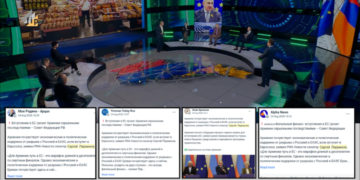
Several allegations circulated months ago by Russian disinformation networks about the Firebird AI artificial intelligence center being built in Armenia are now resurfacing in publications by Russian state institutions and media outlets. In particular, on October 8, Alexey Shevtsov, Deputy Secretary of Russia’s Security Council, claimed that the center could be used by Western intelligence services to conduct intelligence operations against Russia, Iran, and other countries in the region.
In the same statement, he also warned that enhancing the center’s capacity could leave Armenia facing a major electricity shortage.
Shevtsov further noted that, since Firebird is subject to US law, American intelligence services would be able to access all data processed on its servers. “This means that data belonging to Armenia’s government institutions, companies, and citizens will be accessible to the United States without the consent of the Armenian authorities,” he said. In the same statement, he reinforced his speculation, concluding:
“Such centers could be used to carry out analytical and intelligence activities in the interests of Western intelligence services, including against Iran, Russia, as well as the countries of the South Caucasus and Central Asia.”
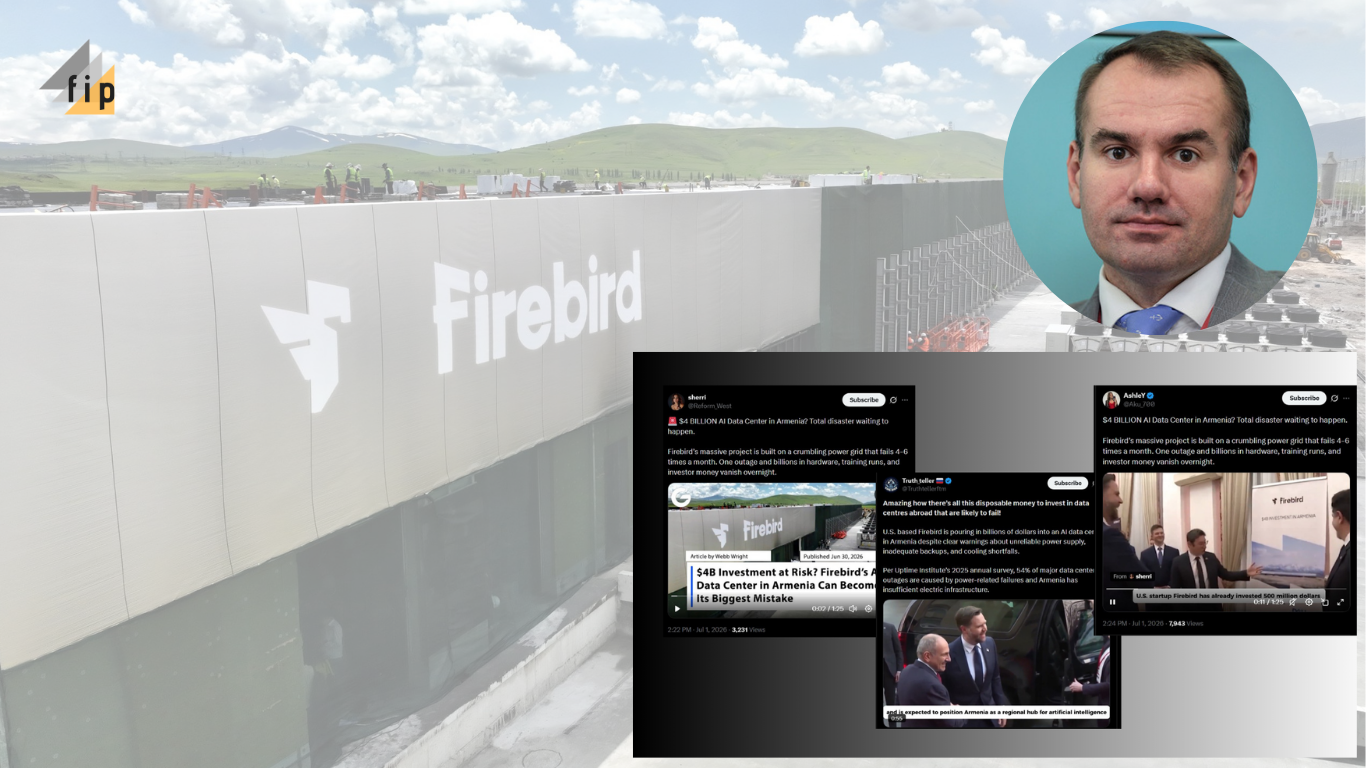
Notably, similar claims had already circulated in June and July as part of campaigns attributed to the Russian disinformation network Storm-1516.
How was the Russian Security Council official’s statement covered in Armenia?
The statement was reported not only by Russian (1, 2, 3, 4, 5), but also by Armenian media (1, 2, 3, 4). Some outlets relayed the Russian official’s claims without conducting fact-checks, while others also published Firebird AI’s debunking statement (1, 2).
As early as September 22, the Russian state broadcaster Rossiya 24 had aired a dedicated report on the facility’s operations, emphasizing that it could be used by US intelligence services for intelligence-gathering purposes targeting two key regional powers: Russia and Iran. Notably, in the report, Arman Abovyan, a Prosperous Armenia Party politician and Sputnik Armenia commentator, claimed that such “data centers” constitute military information technology infrastructure. “What facilities did Iran strike during the US-Iran war? Data centers, of course,” Abovyan stressed.
The Armenian side debunked the statement on September 30. In particular, Davit Tadevosyan, Minister of High-Tech Industry and Artificial Intelligence, described as politicized the claim that the Firebird AI center could serve an intelligence-gathering purpose.
Then, on October 8, following the Russian Security Council official’s statement, Firebird AI dismissed the claims, stating that it is a technology company that builds and operates high-performance computing infrastructure for artificial intelligence.
“The US export license granted to the company restricts the use of this computing capacity exclusively to civilian purposes,” the rebuttal stated.
What is a repetition and what has changed?
The most striking overlap between the June–July disinformation campaign targeting Firebird AI and the September report by Russian state television concerns the center’s alleged intelligence-gathering role and the prospect of a potential Iranian military strike.
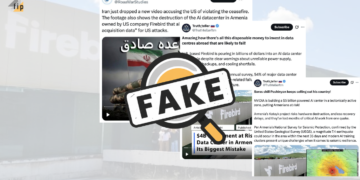
As FIP.am previously established, one of the videos circulated by a network attributed to Storm-1516 portrayed the Firebird AI center under construction in Armenia as a US intelligence facility. The narrative that Iran could potentially strike the center was built around this unsubstantiated claim.
How Storm 1516 is targeting Armenia’s AI factory: three false narratives in one month
On September 22, a report aired by Russia’s state-run Rossiya 24 television channel once again raised the possibility that the center could serve the interests of US intelligence services. Arman Abovyan, a Sputnik Armenia commentator featured in the report, characterized data centers as military information technology infrastructure, referring to Iranian strikes against such facilities.
| Date | Source | Claim |
| June 30 | Storm-1516 | Alleged disruptions to Armenia’s electricity grid and technical problems at the data center could jeopardize the project’s operations.
|
| July 7 | Storm-1516 | Firebird AI is portrayed as a US intelligence center that could become a military target for Iran.
|
| September 22 | Rossiya 24 television channel | The center could be used for US intelligence purposes. The report also mentions Iranian strikes against data centers.
|
| October 8 | Russian Security Council | Such centers could be used by Western intelligence services, while Firebird’s expansion could lead to an electricity shortage.
|
Thus, in both reports, Firebird AI’s alleged intelligence-gathering role is linked to Iran’s security and the possibility of a military threat.
On October 8, Alexey Shevtsov, Deputy Secretary of Russia’s Security Council, addressed the same issue, stating that such centers could be used by Western intelligence services against Iran and Russia.
The July disinformation campaign also employed a tactic involving the imitation of the name of a reputable news outlet and web address. Specifically, on July 1, the “Sprinter Press” account on X circulated a post about alleged energy-related problems at Firebird AI, citing gizmodo.cc. The domain mimics the address of the actual website of the American technology website Gizmodo (gizmodo.com).
Notably, X currently displays a warning when users attempt to open the cited link, classifying it as potentially spammy or harmful.
Conclusion
A comparison of publications about Firebird AI shows that claims about security threats circulated in June and July through disinformation campaigns attributed to Storm-1516 subsequently found their way to Russian state television reports and the official discourse of Russia’s Security Council, before spreading further through numerous Kremlin-aligned propaganda outlets.
The most apparent example is the repetition of the narrative that the center has an alleged intelligence-gathering role and there is a military threat in connection with Iran. In a fake video circulated in July, Firebird AI was portrayed as a US intelligence center and a potential military target for Iran. In the September report by Russian state television, the possibility of the center being used for intelligence purposes was again discussed in the context of Iranian strikes against data centers.
The narrative that Firebird AI could pose a risk to Armenia’s energy security has also resurfaced, although the arguments presented and the predicted consequences differ across publications.
In effect, the same overarching narrative portraying Firebird AI as a security threat has emerged at different times and across different information platforms.
Hasmik Hambardzumyan